How I Stopped Gambling on Investments and Started Building Real Financial Freedom
I used to think financial freedom meant picking the next big stock or timing the market perfectly. Spoiler: it doesn’t. I burned out chasing returns, only to realize I was ignoring the real game—risk management. After one too many sleepless nights, I shifted focus. Instead of asking ‘How much can I make?’, I started asking ‘How much can I afford to lose?’ That tiny mindset change changed everything. This is how I built a life where money works *for* me—not the other way around. The journey wasn’t about finding a magic formula or uncovering secret market insights. It was about redefining what success looked like—trading the adrenaline rush of quick wins for the quiet confidence of long-term stability. What I discovered wasn’t just better returns; it was peace of mind, control over my time, and the freedom to live without financial fear dictating my choices.
The Wake-Up Call: When My Portfolio Nearly Crashed My Peace of Mind
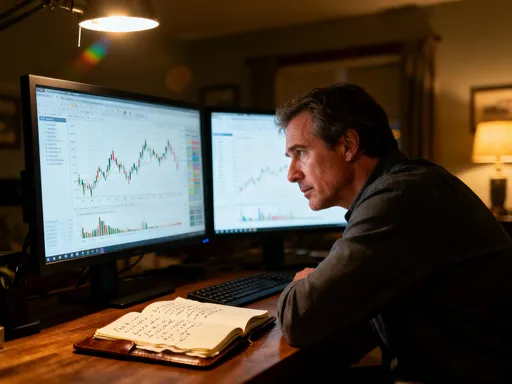
There was a time when my financial decisions felt more like a high-stakes game than a thoughtful plan. I remember waking up in the middle of the night, heart racing, reaching for my phone to check the latest market numbers. A single red candle on a stock I had heavily invested in sent waves of anxiety through me. I had poured a significant portion of my savings into a few technology startups and high-growth funds, convinced that if I just held on tight, I would ride the wave to early retirement. But when the market corrected—nothing dramatic, just a natural dip—I felt like I was falling off a cliff. That’s when I realized: I didn’t have a strategy. I had hope. And hope is not a financial plan.
My emotional reactions were driving my decisions. I bought high because I was excited, and I sold low because I was scared. I jumped into trendy sectors without understanding the underlying risks, lured by stories of overnight millionaires. I ignored warning signs because I didn’t want to miss out. This pattern wasn’t just hurting my portfolio—it was eroding my mental well-being. I became irritable, distracted, and constantly worried. My relationships suffered. I wasn’t managing money; I was being managed by it. The turning point came when I reviewed my portfolio after a 20% drop and realized I couldn’t explain why I owned half the assets in it. I had no clear rationale, no exit strategy, and no safety net. I was gambling, not investing.
That moment of clarity was painful but necessary. I began to see that true financial health isn’t measured solely by account balances or quarterly returns. It’s measured by how you feel when the market turns. Can you sleep at night? Can you focus on your family, your work, your hobbies? If your financial decisions leave you anxious and reactive, then no amount of growth can be considered success. I realized that without a foundation of risk management, even the most impressive gains could vanish overnight. So I made a promise to myself: from that day forward, my primary goal wouldn’t be to maximize returns—it would be to protect what I already had. That shift in focus marked the beginning of a completely different relationship with money.
Redefining Financial Freedom: It’s Not About Returns, It’s About Control
For years, I equated financial freedom with high returns. I thought it meant retiring at 50, owning a luxury car, or traveling the world without a care. I followed financial influencers who boasted about doubling their money in months, and I felt behind because I wasn’t doing the same. But the truth is, those stories often leave out the risk, the sleepless nights, and the near-misses. Real financial freedom isn’t about how much money you make—it’s about how much control you have over your life and decisions. It’s the ability to say no to things you don’t want, to take time off when you need it, and to face unexpected challenges without panic.
Think of it like driving a car. You could drive at top speed, chasing the thrill of acceleration, but without brakes or seatbelts, one small mistake could be catastrophic. That’s what aggressive investing without risk management feels like. On the other hand, driving at a steady, safe pace with full control allows you to reach your destination reliably, even if it takes a little longer. That’s the kind of freedom I now aim for—one built on predictability, not volatility. I no longer measure my progress by how fast my portfolio grows, but by how stable and resilient it is.
This redefinition changed my entire approach. Instead of scanning headlines for the next ‘hot’ stock, I started asking deeper questions: Does this investment align with my long-term goals? Can I afford to lose it? How will it affect my overall balance if it underperforms? These questions shifted my identity from that of a speculator to that of a steward of my resources. I began to see my finances not as a scoreboard, but as a system designed to support my life. The result? Less stress, fewer impulsive decisions, and a growing sense of confidence. I wasn’t just building wealth—I was building a life where money serves me, not the other way around.
The Core Principle: Protect First, Grow Later
The most important lesson I learned is this: wealth is not created by taking risks, but by managing them wisely. The foundation of any solid financial plan isn’t growth—it’s protection. Before you chase returns, you must first ensure that what you’ve already earned is safe. This principle, often overlooked in favor of flashy investment strategies, is what separates sustainable wealth from short-term luck. Think of it like home insurance. You don’t buy insurance because you expect your house to burn down tomorrow—you buy it because you can’t afford to lose everything if it does. The same logic applies to investing.
Capital preservation should be the priority, especially for those in or approaching their family-building or retirement years. Once you’ve worked hard to accumulate savings, the last thing you want is to lose it all in a market downturn or a poorly thought-out bet. I started treating my investment portfolio like a fortress: the core had to be strong, stable, and resistant to shocks. I moved a significant portion of my assets into low-volatility instruments—such as broad-market index funds, high-quality bonds, and dividend-paying stocks—that have historically provided steady, long-term growth without extreme swings. These aren’t the most exciting investments, but they are reliable.
By prioritizing protection, I gave myself permission to take thoughtful, measured risks elsewhere—risks that were calculated, not emotional. I could explore emerging opportunities without fear because I knew my foundation was secure. This approach also allowed me to make decisions with clarity, not desperation. When markets dip, I don’t panic—I assess. When a new opportunity arises, I don’t jump—I evaluate. Protecting first doesn’t mean avoiding growth; it means creating the conditions where growth can happen sustainably. It’s the difference between building on solid ground versus quicksand.
Diversification Done Right: Not Just Spreading Money, But Smoothing Risk
Most people think diversification means owning a few different stocks or funds. But real diversification goes much deeper. It’s not just about spreading your money across assets—it’s about smoothing risk across different types of investments, time horizons, and income sources. I used to believe I was diversified because I held stocks in tech, healthcare, and energy. But when the market crashed, nearly all my holdings dropped together. That’s when I realized: true diversification requires assets that respond differently to the same economic conditions.
I redesigned my portfolio with this principle in mind. I now include a mix of equities, fixed income, real estate investment trusts (REITs), and cash equivalents. Each category serves a specific purpose. Equities offer long-term growth potential, but I limit their share to what I can afford to risk. Bonds provide income and stability, acting as a counterbalance when stocks fall. REITs give me exposure to real estate without the hassle of property management, and they often perform well when inflation rises. Cash equivalents ensure I always have liquidity for emergencies or opportunities. I also diversified across time—some investments are for the short term (1–3 years), others for the medium term (5–10 years), and others for the long haul (20+ years).
Equally important is income diversification. I no longer rely solely on portfolio growth. I’ve built streams of passive income—dividends, interest, and rental income—that provide cash flow regardless of market movements. This means that even in a downturn, I’m not forced to sell assets at a loss to cover expenses. Diversification, when done right, isn’t about maximizing returns—it’s about minimizing the damage when things go wrong. It’s the financial equivalent of wearing a seatbelt, airbags, and anti-lock brakes all at once. You hope you’ll never need them, but you’ll be glad they’re there when you do.
The Emergency Buffer: Why I Keep Cash Calm (and You Should Too)
One of the most powerful tools in my financial toolkit is something often overlooked: cash. Not as a dead asset, but as a strategic reserve. I maintain an emergency fund equal to 12–18 months of essential living expenses in a high-yield savings account—safe, accessible, and earning a modest return. This isn’t part of my investment portfolio; it’s a separate buffer, designed to absorb life’s surprises without forcing me to touch my long-term investments.
Why is this so important? Because financial stress often comes not from market drops, but from having to make decisions under pressure. Imagine losing your job or facing a major medical bill during a market downturn. If you don’t have cash on hand, you might be forced to sell stocks at their lowest point—locking in losses and derailing your long-term plan. I’ve seen it happen too many times. The emergency buffer eliminates that pressure. It gives me the freedom to wait, to assess, and to act from a position of strength, not desperation.
This cash reserve also allows me to stay disciplined. When everyone else is panicking and selling, I can remain calm, knowing I’m not dependent on market performance for my immediate needs. It also creates opportunity. During the last market correction, I was able to selectively invest in high-quality assets at discounted prices—something I couldn’t have done if I’d been drained by emergencies. Keeping cash isn’t about being conservative; it’s about being prepared. It’s the difference between reacting and responding. And in the long run, that calm, deliberate approach has done more for my wealth than any single investment ever could.
Stress-Testing My Plan: Simulating the Worst So I’m Ready for Anything
One habit that transformed my confidence was starting to stress-test my financial plan. Instead of waiting for a crisis to reveal my weaknesses, I began simulating worst-case scenarios on paper. What if I lost my job tomorrow? What if the market dropped 40%? What if I faced a major health issue? I sat down and mapped out how each of these events would impact my finances, month by month. I looked at my income, expenses, savings, insurance, and investment liquidity. The goal wasn’t to scare myself—it was to identify vulnerabilities before they became real problems.
What I discovered was eye-opening. I realized I didn’t have enough short-term liquidity to cover a six-month job loss without touching my retirement accounts. I also found gaps in my insurance coverage that could leave me exposed to large out-of-pocket costs. More importantly, I saw how emotional I would likely become in a crisis—and how that could lead to poor decisions. So I adjusted my plan. I increased my emergency fund, reviewed my insurance policies, and created a clear action checklist for different scenarios. I even shared this plan with my family so everyone knew what to do if something happened.
Now, twice a year, I revisit these scenarios and update my plan. This practice has done more for my peace of mind than any positive market return. I no longer fear downturns because I’ve already lived through them—in my imagination. I know what I would do, how long I could last, and where my support systems are. This doesn’t mean I’m immune to loss or hardship, but it means I’m no longer ruled by fear. I’ve replaced anxiety with preparedness, and that shift has given me a sense of control that no stock tip ever could.
Living the Freedom: How Managing Risk Gave Me Real Peace
The greatest reward of prioritizing risk management isn’t a bigger bank account—it’s a calmer life. I no longer check my portfolio every day. I don’t flinch when the market drops. I sleep through earnings season. These might sound like small things, but they represent a profound shift. I’ve traded the illusion of control—trying to predict the market—for the reality of control—designing a system that works regardless of what the market does.
Financial freedom, I’ve learned, isn’t about having endless money. It’s about having enough—and knowing it’s safe. It’s about making intentional choices: taking a sabbatical to care for a family member, turning down a high-paying but stressful job, or simply spending a Saturday without worrying about the stock market. These are the moments that make life rich. And they’re only possible when money isn’t a source of constant stress.
Risk management isn’t a restriction—it’s an enabler. It’s what allows you to take thoughtful risks, pursue meaningful goals, and live with confidence. By protecting first, diversifying wisely, holding cash with purpose, and planning for the worst, I’ve built a financial life that supports my values, not my fears. I’m not chasing the next big win. I’m focused on long-term stability, emotional resilience, and the quiet joy of knowing I’m prepared. That, more than any return, is what true financial freedom feels like.